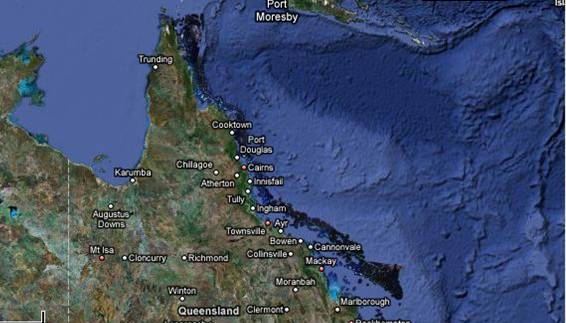
Information on the Great Barrier Reef
The Great Barrier Reef is the largest coral reef system in the world,composed of over 2,900 individual reefs and 900 islands stretching for 2,600 kilometres (1,600 mi) over an area of approximately 344,400 square kilometres (133,000 sq mi). The reef is located in the Coral Sea, off the coast of Queensland in northeast Australia.
The Great Barrier Reef can be seen from outer space and is the world's biggest single structure made by living organisms. This reef structure is composed of and built by billions of tiny organisms, known as coralpolyps. The Great Barrier Reef supports a wide diversity of life, and was selected as a World Heritage Site in 1981. CNN has labelled it one of the 7 natural wonders of the world. The Queensland National Trust has named it a state icon of Queensland.
A large part of the reef is protected by the Great Barrier Reef Marine Park, which helps to limit the impact of human use, such as overfishing and tourism. Other environmental pressures to the reef and its ecosystem include water quality from runoff, climate change accompanied by mass coral bleaching, and cyclic outbreaks of the crown-of-thorns starfish.
The Formation of the Great Barrier Reef
The tiny coral polyps began building their great Reef in the Miocene epoch which began began 23.7 million years ago and ended 5.3 million years ago. As the polyps died and became cemented together by algae, the spaces between the skeletons were filled in by wave action that forced in other debris called infill to create a relatively solid mass at depth.
polyps died and became cemented together by algae, the spaces between the skeletons were filled in by wave action that forced in other debris called infill to create a relatively solid mass at depth.